





Monsoon Car Care Guide 2026: The Ultimate Protection Checklist for Rainy Season Driving
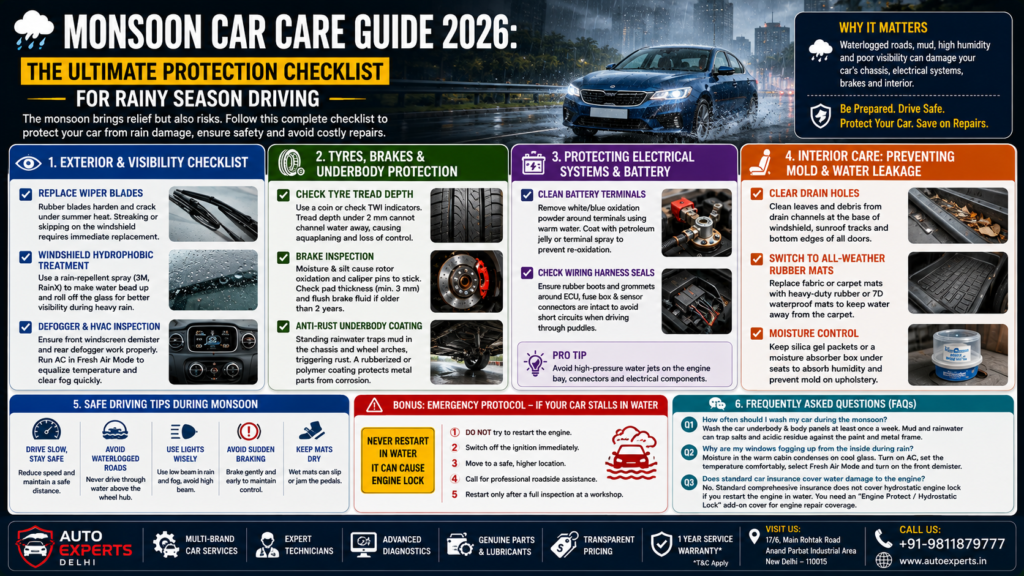
The monsoon season brings much-needed relief from summer heat, but it also creates severe driving hazards and long-term wear on vehicles. Waterlogged underpasses, mud accumulation, reduced road traction, and high atmospheric humidity can damage a car’s chassis, electrical systems, brakes, and interior cabin.
This complete guide breaks down the essential pre-monsoon and active-monsoon maintenance steps to protect your vehicle from costly repairs and keep your drive safe.
1. Exterior & Visibility Checklist
During heavy downpours, visibility becomes your primary safety defense.
- Replace Wiper Blades: Rubber blades harden and crack under summer heat. Streaking or skipping on the windshield requires immediate replacement.
- Windshield Hydrophobic Treatment: Applying a rain-repellent spray (such as 3M or RainX) causes water to bead up and roll off the glass, improving visibility during torrential downpours.
- Defogger & HVAC Inspection: Ensure both your front windscreen demister and rear glass electric defogger clear mist quickly. Run the AC in Fresh Air Mode to equalize interior and exterior temperature and clear fogging fast.
2. Tyres, Brakes & Underbody Protection
Wet roads increase stopping distances by 30% to 40% and increase the risk of aquaplaning (loss of traction over standing water).
Check Tyre Tread Depth: Insert a coin or check the tread wear indicators (TWI) on your tyre. Tread depth under 2 mm cannot channel water away, causing the car to slide over puddles.
Brake Inspection: Moisture and silt accelerate brake rotor oxidation and cause caliper slider pins to stick. Have a mechanic check pad thickness (minimum 3 mm) and flush moisture-contaminated brake fluid if older than 2 years.
Anti-Rust Underbody Coating: Standing rainwater traps mud in the chassis and wheel arches, triggering frame rust. A rubberized or polymer underbody spray forms a protective seal that repels water and prevents corrosion.
3. Protecting Electrical Systems & Battery
High atmospheric humidity and standing water splash pose severe threats to car electronics.
- Clean Battery Terminals: Remove white/blue oxidation powder around terminals using warm water, then coat with petroleum jelly or terminal spray to prevent re-oxidation.
- Check Wiring Harness Seals: Ensure rubber boots and grommets surrounding the ECU, fuse box, and sensor connectors are intact to avoid short circuits when driving through puddles.
4. Interior Care: Preventing Mold & Water Leakage
Trapped dampness inside the cabin creates bad odors, damages electronics, and promotes mold growth.
Clear Drain Holes: Clean leaves and debris from the drain channels located at the base of the windshield, sunroof tracks, and bottom edges of all doors.
Switch to All-Weather Rubber Mats: Replace fabric or carpet floor mats with heavy-duty rubber or 7D waterproof mats to prevent wet shoes from soaking into the car’s carpet.
Moisture Control: Keep silica gel packets or a moisture absorber box under the seats to absorb excess humidity and prevent fungal growth on leather upholstery.
5. Frequently Asked Questions (FAQs)
Q1: How often should I wash my car during the monsoon?
Wash the car underbody and body panels at least once a week during monsoon season. Allowing rainwater and mud to dry on the vehicle traps salts and acidic road residue against the paint and metal frame.
Q2: Why are my windows fogging up from the inside during rain?
Windows fog up because moisture inside the warm cabin condenses against the cool glass. Turn on the AC, set the temperature to a comfortable level, select Fresh Air Mode, and turn on the front demister vent.
Q3: Does standard car insurance cover water damage to the engine?
Standard comprehensive car insurance does not cover hydrostatic engine lock if you attempt to restart the engine in water. You must have an “Engine Protect / Hydrostatic Lock” add-on cover on your policy for engine repair coverage.