





Headlight Fogging and Dullness: Causes, Fixes, and Prevention
Foggy, yellowed headlights are one of the few problems that make a well-maintained luxury car suddenly look neglected. It’s not just cosmetic, either — dull headlights genuinely cut down how far your light reaches at night, which matters far more than most owners realize until they’re driving an unlit stretch of road with weaker beams than they’re used to.
The good news is that headlight fogging is one of the most fixable, preventable issues a car can have — as long as you understand what’s actually causing it.
What’s Actually Happening Inside That Lens
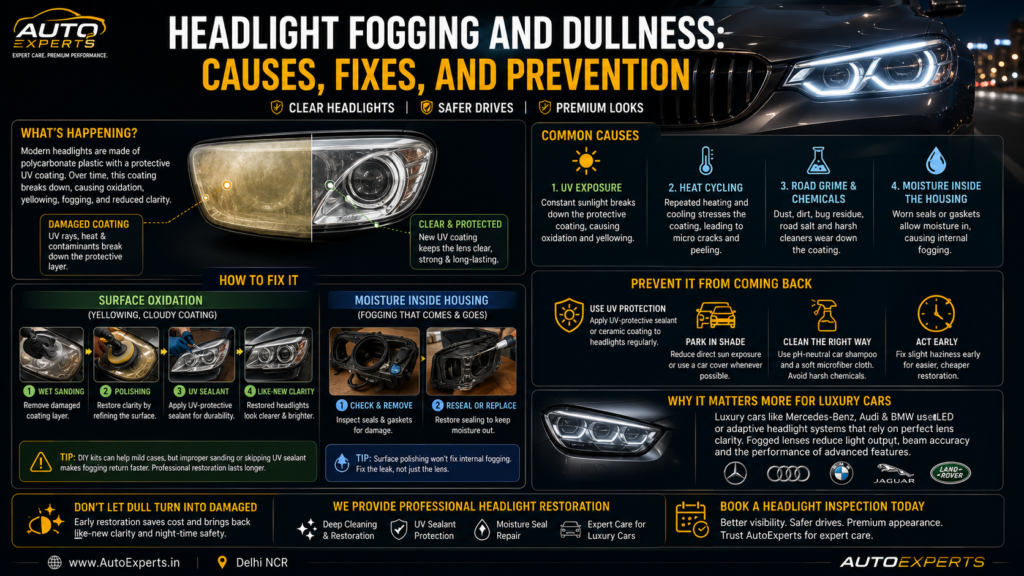
Modern headlights aren’t made of glass — they’re made of polycarbonate plastic, chosen because it’s lighter and more impact-resistant than glass. The tradeoff is that polycarbonate isn’t naturally UV-resistant on its own, so manufacturers apply a clear protective coating over it at the factory to block UV rays and keep the surface hard and clear.
That coating is the part that fails over time — not the headlight itself. Once it degrades, the polycarbonate underneath is directly exposed to sun, heat, and oxidation, which is what causes the fogging, yellowing, and dullness you see on the surface.
What Causes It
1. UV Exposure
This is the primary cause, especially in a sun-heavy climate. Constant UV exposure breaks down the protective coating faster than most owners expect — typically becoming noticeable within a few years, even on a well-maintained car.
Why it matters: Once the coating is compromised, the underlying plastic starts oxidizing on its own, and that process accelerates once it begins, since the damaged surface has less protection than a fresh coating.
2. Heat Cycling
Headlights go through repeated heat cycles every time they’re used — heating up from the bulb, cooling down when switched off — day after day, on top of ambient heat from the engine bay and sun exposure. Over time, this repeated expansion and contraction stresses the coating and contributes to it cracking or peeling at a microscopic level.
Why it matters: This is part of why headlights on older vehicles, or vehicles that see a lot of daytime running light use, tend to fog faster — more heat cycles over the car’s life means more stress on that protective layer.
3. Road Grime and Chemical Exposure
Dust, road salt, bug residue, and chemical residue from automatic car washes can gradually wear down the coating’s surface, especially if headlights are cleaned with harsh cleaners or abrasive materials not meant for polycarbonate.
Why it matters: This is one of the more preventable causes on this list — the wrong cleaning product can do in a few washes what would otherwise take years of UV exposure to cause.
4. Moisture Getting Past the Seal
Sometimes what looks like fogging is actually moisture inside the headlight housing itself, from a degraded seal or gasket letting humidity in.
Why it matters: This is a different problem from surface oxidation and needs a different fix — polishing the outside won’t help if the fog is condensation trapped inside the housing. If you see fogging appear and disappear depending on humidity or after rain, this is likely the cause rather than UV damage.
How to Fix It
For Surface Oxidation (Yellowing, Cloudy Coating)
Light cases: A proper headlight restoration — wet-sanding the damaged coating layer down, polishing the polycarbonate underneath back to clarity, and applying a new UV-protective sealant — can restore near-original clarity. This is a well-established process and, done properly, makes a significant visible difference.
Important caution: DIY headlight restoration kits can work for mild cases, but they’re easy to get wrong. Sanding unevenly or skipping the final UV sealant step often means the fogging returns within months, sometimes looking worse than before because the surface is now unprotected. A professional restoration includes reapplying that UV coating — without it, you’re just delaying the same problem.
Severe cases: If the polycarbonate itself has deep cracking, cloudiness that won’t polish out, or damage that goes beyond the surface, restoration may not be enough, and headlight replacement becomes the more reliable option — particularly relevant for LED or adaptive headlight units common on newer luxury models, where light output consistency matters for the system to function as designed.
For Moisture Inside the Housing
This requires resealing or replacing the housing gasket, not surface polishing. Attempting a UV restoration on a headlight that’s actually leaking moisture won’t solve the underlying problem, and it can return within the first rainy season.
How to Prevent It From Coming Back
Apply a UV-protective sealant or ceramic coating to headlights specifically. This is often overlooked — many owners apply ceramic coating to their paint but skip the headlights, even though headlights face some of the harshest UV exposure on the entire car.
Park in shade or use a car cover when possible. Reducing direct sun exposure, especially during peak summer hours, slows down UV degradation meaningfully over the life of the coating.
Clean headlights with the right products. Use a pH-neutral car wash soap and a soft microfiber cloth — avoid household glass cleaners or ammonia-based products, which can be harsh on the polycarbonate’s protective coating.
Address fogging early. A slightly hazy headlight is a far easier, cheaper restoration than one that’s fully yellowed and cracked. Catching it in the early stage often means a lighter polish rather than a full wet-sand restoration.
Why This Matters More for Luxury Vehicles
Many Mercedes-Benz, Audi, and BMW models use LED or adaptive LED headlight systems, which are more expensive to replace than standard halogen units and, in the case of adaptive systems, rely on precise lens clarity for features like auto-leveling and glare-free high beams to work correctly. A fogged or oxidized lens on these systems isn’t just a cosmetic issue — it can measurably reduce light output and beam pattern accuracy at exactly the moment you need it most.
Don’t Let It Go From Dull to Damaged
Foggy headlights rarely go from clear to fully yellowed overnight — it’s a gradual process, which means there’s usually a window where a proper restoration and UV sealant can bring them back to like-new clarity, before the damage goes deep enough to require replacement.
At AutoExperts, we assess whether your headlights need a restoration or a replacement, and we always finish a restoration with proper UV sealant — not a shortcut that fogs back up in a few months. Book a headlight inspection with us, and see your night drives the way they’re supposed to look.