Autoexperts

Uncategorized

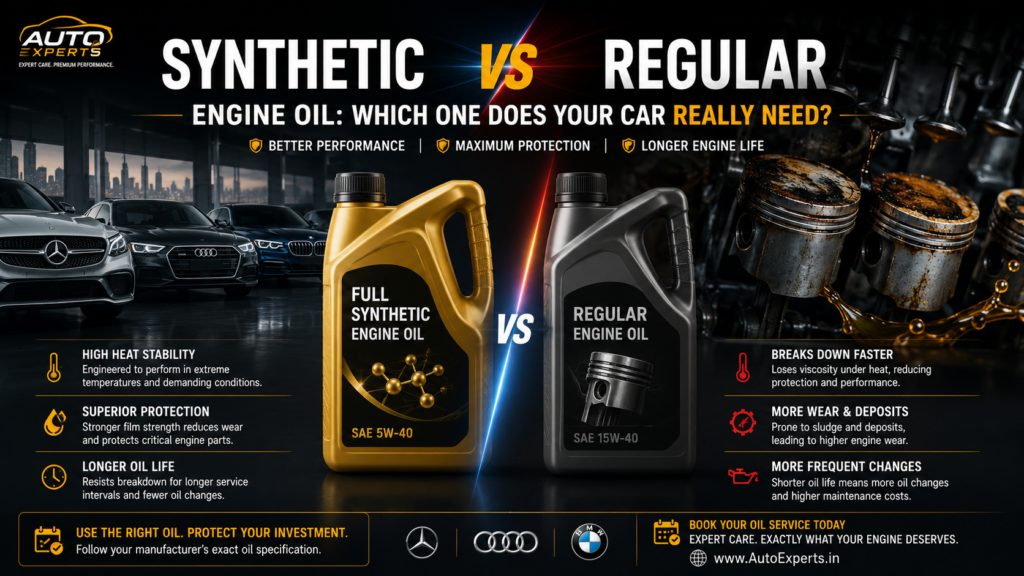
Synthetic vs regular engine oil comparison showing why full synthetic oil is recommended for Mercedes-Benz, BMW, Audi, Jaguar, and Land Rover engines.

Synthetic vs Regular Engine Oil

Synthetic vs Regular Engine Oil: Which One Does Your Car Really Need? Walk into any auto parts store and you’ll find a wall of oil bottles — synthetic, semi-synthetic, conventional, high-mileage, each promising something different. For most drivers, this decision gets made in about ten seconds, usually based on price. But for luxury vehicles like Mercedes-Benz, Audi, and BMW, the type of oil you use isn’t just a maintenance preference — it directly affects engine performance, longevity, and in many cases, your warranty. Here’s what actually separates synthetic from conventional oil, and which one your car is genuinely built for. What’s the Actual Difference? Conventional oil is refined directly from crude oil. It’s been the industry standard for decades and works fine for older, simpler engines with looser tolerances. It’s cheaper, but it breaks down faster under heat and stress, and it leaves more deposits behind over time. Synthetic oil is chemically engineered rather than simply refined. Manufacturers build the oil molecules to a consistent size and structure, which means it flows more evenly, resists breaking down at high temperatures, and keeps its protective properties for far longer. Semi-synthetic (or “synthetic blend”) oil sits in between — a mix of conventional and synthetic oil that offers some of the benefits of full synthetic at a lower price point, though with less of the performance upside. The short version: synthetic oil is a more refined, more consistent product designed to handle more demanding conditions. And “demanding conditions” describes exactly what luxury performance engines are built for. Why This Matters More for Mercedes, Audi, and BMW Owners 1. Turbocharged Engines Run Hotter Most modern Mercedes, Audi, and BMW engines are turbocharged, which means they generate significantly more heat than a naturally aspirated engine. Turbochargers spin at extremely high speeds and rely on oil for both lubrication and cooling. Conventional oil breaks down faster under this kind of heat, losing its ability to protect the turbo’s bearings — which are some of the most expensive components to replace if they fail. Solution: Full synthetic oil handles high heat without breaking down, protecting the turbo and keeping oil pressure consistent even during hard driving or hot weather. 2. Tighter Engine Tolerances Need Consistent Flow Luxury performance engines are built with tighter tolerances between moving parts than most mainstream engines. That precision is part of what makes them powerful and efficient — but it also means the oil needs to flow evenly and consistently to properly lubricate every surface, especially during cold starts when oil is at its thickest. Solution: Synthetic oil maintains a more stable viscosity across temperature extremes, so it flows properly on a cold morning start and stays protective once the engine is at full operating temperature. 3. Manufacturer Specifications Often Require It This is the part many owners don’t realize: most Mercedes-Benz, Audi, and BMW models are engineered to run specific manufacturer-approved oil specifications (like BMW LL-01, Mercedes MB 229.5, or Audi/VW 502.00) — and these specs are built around full synthetic oil, not conventional. Solution: Using an oil that doesn’t meet your car’s required specification — even if it’s technically “synthetic” — can affect performance and, in some cases, void warranty coverage. Always check your owner’s manual or ask your service center to confirm the exact spec your engine calls for. 4. Longer Intervals Between Changes Synthetic oil breaks down more slowly, which is why many synthetic-oil vehicles have extended service intervals compared to conventional oil (often 7,500–10,000 miles versus 3,000–5,000 for conventional). If you’re still changing your oil every 3,000 miles “just to be safe,” you may be spending more than necessary without any added benefit. Solution: Follow the interval specified for your exact model and driving conditions — frequent short trips, towing, or hot climates can shorten that interval, so it’s worth confirming with your service advisor rather than guessing. So Which One Does Your Car Actually Need? For the vast majority of Mercedes-Benz, Audi, and BMW models on the road today, the answer is straightforward: full synthetic oil, matching your manufacturer’s exact specification. These engines were designed around synthetic oil’s properties from the start, and running conventional oil — even temporarily — can mean faster wear on the turbo, timing components, and internal engine surfaces. The only real exceptions are older, pre-turbo models where the manufacturer originally specified conventional oil. Even then, most technicians will recommend upgrading to synthetic, since it offers better protection with no real downside beyond a modestly higher price per oil change. The Cost of Getting It Wrong Using the wrong oil rarely causes an immediate, obvious problem — that’s what makes it risky. The effects show up gradually: slightly faster wear on the turbo, more carbon buildup, oil that breaks down before your next scheduled change. By the time it becomes a noticeable issue, you’re often looking at a repair bill far larger than the difference in oil cost would have ever added up to. The reverse is also true. Consistently using the correct synthetic oil, on the correct schedule, is one of the simplest and cheapest things you can do to protect a high-value engine over the long run. Not Sure What Your Car Needs? We’ll Check. Oil specifications vary not just by brand, but by model year and engine type — the right oil for a 2019 BMW 3 Series isn’t necessarily the right oil for a 2023 X5. Rather than guessing from a bottle label, it’s worth having a technician confirm the exact spec your vehicle requires. At AutoExperts, every oil change is matched to your exact manufacturer specification — no shortcuts, no generic blends. Book your next oil service with us and drive with the confidence that your engine is getting exactly what it was built for.

Synthetic vs Regular Engine Oil Read More »

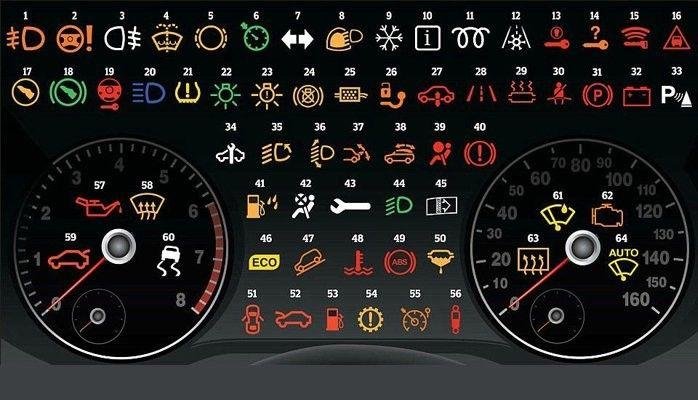
Mercedes dashboard warning lights indicating engine and brake system alerts

Is Your Car Trying to Tell You Something? 7 Warning Signs You Shouldn’t Ignore

Your car talks to you every single day — through sounds, smells, vibrations, and small changes in the way it drives. The problem is, most of us are too busy to listen. We turn up the radio, tell ourselves “it’s probably nothing,” and drive on. For luxury vehicles like Mercedes-Benz, Audi, and BMW, that habit can be an expensive one. These cars are engineered with precision — tighter tolerances, more sensors, and more interconnected systems than the average vehicle. That means small issues rarely stay small for long. What starts as a faint noise or a flickering light can quietly turn into a five-figure repair if it’s ignored long enough. 1. Dashboard Warning Lights That Won’t Go Away The good news? Your car is almost always giving you a heads-up before something fails. Here are seven warning signs worth paying attention to — and what to actually do about them. That little light on your dash isn’t decoration. Modern Mercedes, Audi, and BMW models run dozens of sensors that monitor everything from engine performance to tire pressure to emissions. When one of them detects something outside the normal range, it lights up — often long before you’d notice any change in how the car drives. What it usually means: Anything from a loose gas cap to a failing sensor to an early-stage engine issue. The fix: Don’t guess, and don’t ignore it. A proper diagnostic scan reads the exact fault code your car’s computer has logged, which tells a technician precisely where to look. This is a 15-20 minute job that can save you from driving around with an undiagnosed problem for weeks. 2. Squealing, Grinding, or Clicking Brakes Brakes are one of the few systems where the car will very deliberately warn you before things get serious. Many German-engineered brake pads have a built-in wear indicator — a small metal tab that touches the rotor and produces a high-pitched squeal once the pad is thinning out. If you hear grinding instead of squealing, that usually means the pad is gone and metal is now touching metal. What it usually means: Worn brake pads, warped rotors, or in more serious cases, caliper issues. The fix: Squealing means “book a service this week.” Grinding means “don’t drive it further than you have to — get it checked immediately.” On premium vehicles, rotors and calipers are precision components, and catching pad wear early is far cheaper than replacing rotors that have been scored by worn-out pads. 3. A Steering Wheel That Vibrates or Pulls If your steering wheel shakes at highway speed, or your car quietly drifts to one side when you take your hands off the wheel for a second, that’s your suspension and alignment system talking. What it usually means: Unbalanced tires, a wheel alignment issue, worn suspension components, or in some cases a warped brake rotor (vibration specifically under braking). The fix: A wheel alignment and balance check is quick and inexpensive — and it directly affects tire lifespan. Left unaddressed, poor alignment wears your tires unevenly and puts extra strain on suspension parts that are far pricier to replace than a set of tires. 4. Unusual Smells Inside or Outside the Cabin Smell is one of the most underrated diagnostic tools you have. A sweet smell often points to coolant, a sharp burning smell points to oil or clutch components, and a rotten-egg smell usually points to the catalytic converter or fuel system. What it usually means: The fix: Any of these deserve a same-week inspection. Coolant and oil leaks are especially important to catch early on turbocharged luxury engines, where overheating or low oil pressure can cause serious damage in a short amount of time. 5. Engine Noises That Weren’t There Before A knocking, ticking, or whining sound from under the hood is one of the clearest signs your engine wants attention. On high-performance German engines, these sounds often show up early — well before any dashboard light does — because the components involved are built to such tight tolerances that even small wear is audible. What it usually means: Low oil level or pressure, a failing belt tensioner, worn engine mounts, or valve train wear. The fix: Get it heard by a technician who knows the platform. A whine that’s normal on one model can be a warning sign on another, which is why brand-specific experience matters here — a generalist mechanic may not recognize the difference between a “normal” BMW fuel pump whine and one that signals early failure. 6. A Transmission That Hesitates or Shifts Roughly Smooth, seamless gear changes are a hallmark of luxury vehicles — so when a shift feels delayed, jerky, or the car seems to “think” before changing gears, it’s worth taking seriously. Automatic transmissions in these vehicles are complex, computer-managed systems, and rough shifting is often one of the first signs that something’s off with the transmission fluid, a sensor, or the mechatronic unit. What it usually means: Low or degraded transmission fluid, a software calibration issue, or early wear in transmission components. The fix: In many cases, this is caught early with a fluid service and a diagnostic scan — both relatively minor. Ignored, it can progress to a transmission that needs a full rebuild, which is one of the most expensive repairs a luxury car owner can face. 7. Reduced Power or a Rough Idle If your car feels sluggish off the line, hesitates when you accelerate, or shakes slightly at a stoplight, your engine is telling you it isn’t running as efficiently as it should be. What it usually means: A dirty or failing sensor (like a mass airflow sensor), a misfire, a fuel delivery issue, or a small vacuum leak. The fix: These issues are usually inexpensive to fix on their own — a sensor cleaning or replacement, a fuel injector service — but left alone, they force the engine to work harder than it should, which accelerates wear on other components and hurts

Is Your Car Trying to Tell You Something? 7 Warning Signs You Shouldn’t Ignore Read More »

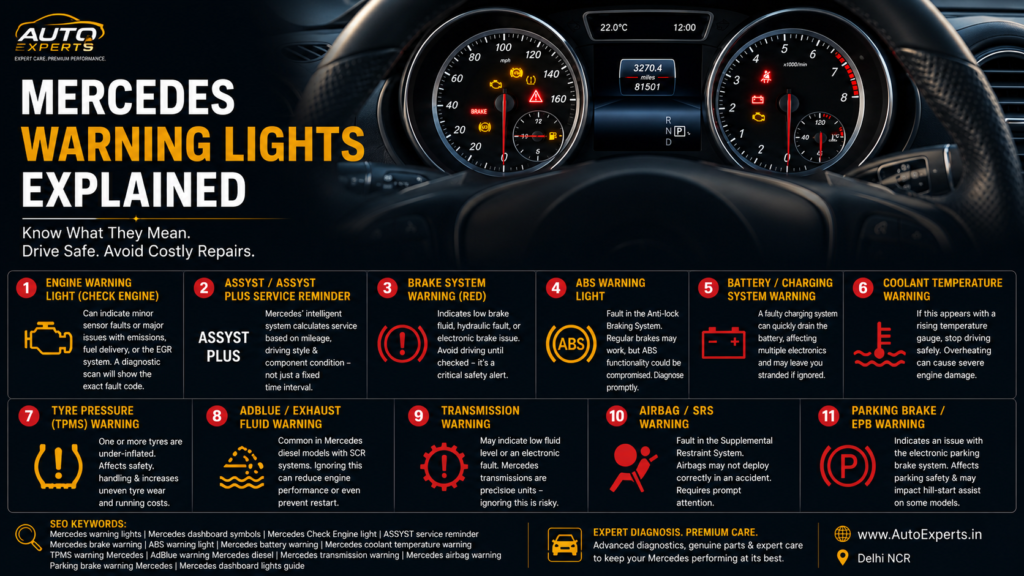
Mercedes dashboard warning lights explained including Check Engine, ABS, TPMS, Battery, Brake, Airbag and Transmission warning symbols.

Mercedes Dashboard Warning Lights Explained: Meanings, Causes & What You Should Do

Introduction Your car talks to you every single day — through sounds, smells, vibrations, and small changes in the way it drives. The problem is, most of us are too busy to listen. We turn up the radio, tell ourselves “it’s probably nothing,” and drive on. For luxury vehicles like Mercedes-Benz, Audi, and BMW, that habit can be an expensive one. These cars are engineered with precision — tighter tolerances, more sensors, and more interconnected systems than the average vehicle. That means small issues rarely stay small for long. What starts as a faint noise or a flickering light can quietly turn into a five-figure repair if it’s ignored long enough. The good news? Your car is almost always giving you a heads-up before something fails. Here are seven warning signs worth paying attention to — and what to actually do about them. 1. Dashboard Warning Lights That Won’t Go Away That little light on your dash isn’t decoration. Modern Mercedes, Audi, and BMW models run dozens of sensors that monitor everything from engine performance to tire pressure to emissions. When one of them detects something outside the normal range, it lights up — often long before you’d notice any change in how the car drives. What it usually means: Anything from a loose gas cap to a failing sensor to an early-stage engine issue. The fix: Don’t guess, and don’t ignore it. A proper diagnostic scan reads the exact fault code your car’s computer has logged, which tells a technician precisely where to look. This is a 15-20 minute job that can save you from driving around with an undiagnosed problem for weeks. 2. Squealing, Grinding, or Clicking Brakes Brakes are one of the few systems where the car will very deliberately warn you before things get serious. Many German-engineered brake pads have a built-in wear indicator — a small metal tab that touches the rotor and produces a high-pitched squeal once the pad is thinning out. If you hear grinding instead of squealing, that usually means the pad is gone and metal is now touching metal. What it usually means: Worn brake pads, warped rotors, or in more serious cases, caliper issues. The fix: Squealing means “book a service this week.” Grinding means “don’t drive it further than you have to — get it checked immediately.” On premium vehicles, rotors and calipers are precision components, and catching pad wear early is far cheaper than replacing rotors that have been scored by worn-out pads. 3. A Steering Wheel That Vibrates or Pulls If your steering wheel shakes at highway speed, or your car quietly drifts to one side when you take your hands off the wheel for a second, that’s your suspension and alignment system talking. What it usually means: Unbalanced tires, a wheel alignment issue, worn suspension components, or in some cases a warped brake rotor (vibration specifically under braking). The fix: A wheel alignment and balance check is quick and inexpensive — and it directly affects tire lifespan. Left unaddressed, poor alignment wears your tires unevenly and puts extra strain on suspension parts that are far pricier to replace than a set of tires. 4. Unusual Smells Inside or Outside the Cabin Smell is one of the most underrated diagnostic tools you have. A sweet smell often points to coolant, a sharp burning smell points to oil or clutch components, and a rotten-egg smell usually points to the catalytic converter or fuel system. What it usually means: The fix: Any of these deserve a same-week inspection. Coolant and oil leaks are especially important to catch early on turbocharged luxury engines, where overheating or low oil pressure can cause serious damage in a short amount of time. 5. Engine Noises That Weren’t There Before A knocking, ticking, or whining sound from under the hood is one of the clearest signs your engine wants attention. On high-performance German engines, these sounds often show up early — well before any dashboard light does — because the components involved are built to such tight tolerances that even small wear is audible. What it usually means: Low oil level or pressure, a failing belt tensioner, worn engine mounts, or valve train wear. The fix: Get it heard by a technician who knows the platform. A whine that’s normal on one model can be a warning sign on another, which is why brand-specific experience matters here — a generalist mechanic may not recognize the difference between a “normal” BMW fuel pump whine and one that signals early failure. 6. A Transmission That Hesitates or Shifts Roughly Smooth, seamless gear changes are a hallmark of luxury vehicles — so when a shift feels delayed, jerky, or the car seems to “think” before changing gears, it’s worth taking seriously. Automatic transmissions in these vehicles are complex, computer-managed systems, and rough shifting is often one of the first signs that something’s off with the transmission fluid, a sensor, or the mechatronic unit. What it usually means: Low or degraded transmission fluid, a software calibration issue, or early wear in transmission components. The fix: In many cases, this is caught early with a fluid service and a diagnostic scan — both relatively minor. Ignored, it can progress to a transmission that needs a full rebuild, which is one of the most expensive repairs a luxury car owner can face. 7. Reduced Power or a Rough Idle If your car feels sluggish off the line, hesitates when you accelerate, or shakes slightly at a stoplight, your engine is telling you it isn’t running as efficiently as it should be. What it usually means: A dirty or failing sensor (like a mass airflow sensor), a misfire, a fuel delivery issue, or a small vacuum leak. The fix: These issues are usually inexpensive to fix on their own — a sensor cleaning or replacement, a fuel injector service — but left alone, they force the engine to work harder than it should, which accelerates wear on other components and

Mercedes Dashboard Warning Lights Explained: Meanings, Causes & What You Should Do Read More »